
Driving with your dog in Spain: DGT rules and tips
How to take your dog in the car safely and without a fine: what Spain's traffic authority says, which restraints to use and how to prepare a long trip.
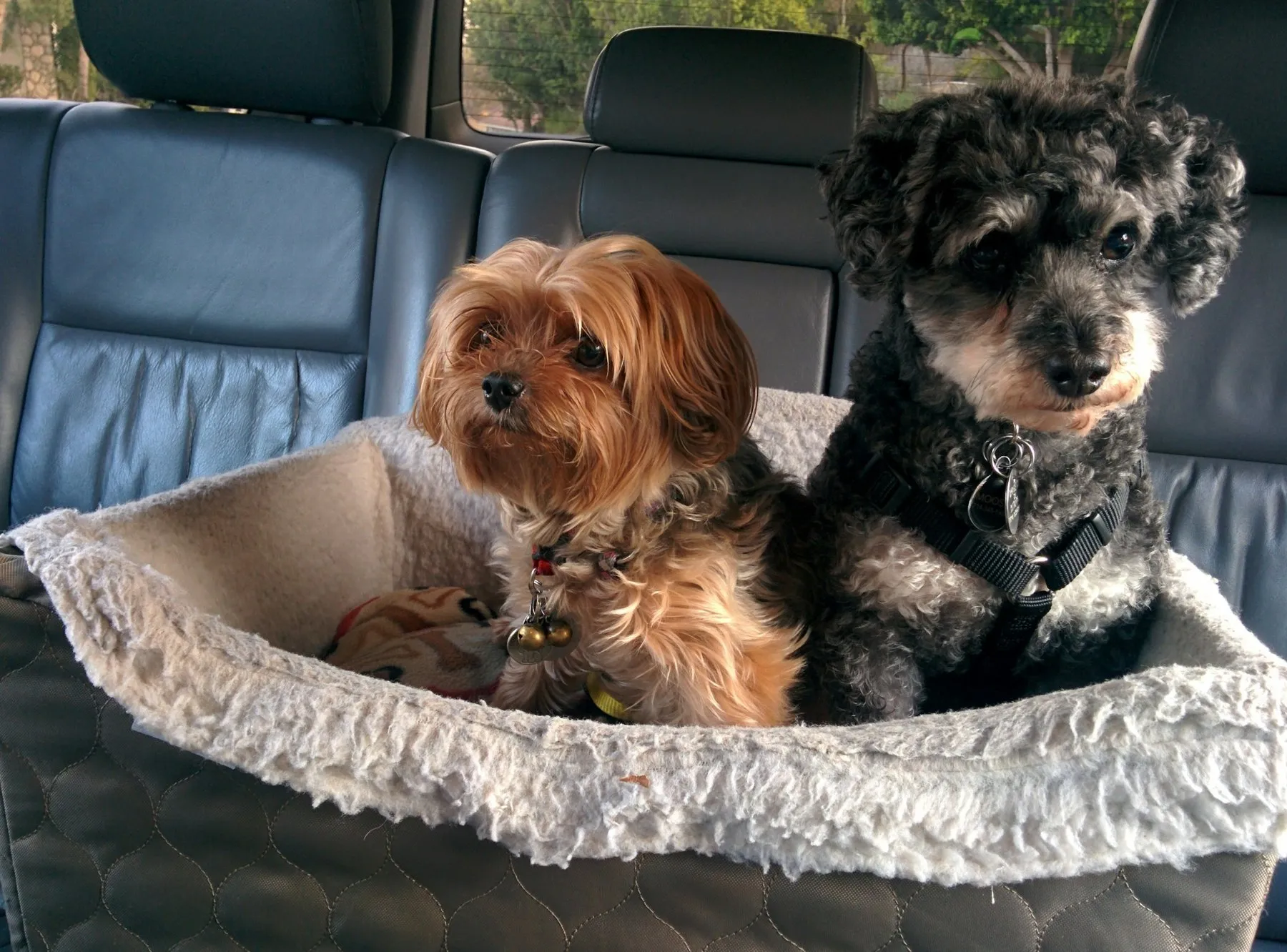
A trip to the mountains, a long weekend in Córdoba or Granada, a drive back to see family… Travelling with your dog is great, but in a car a loose dog is a danger to them and to everyone else. In a sudden stop they’re thrown forward with huge force, and they also distract the driver.
What the DGT says
Spain’s traffic rules have no article just about dogs, but article 18.1 of the General Traffic Regulations requires drivers to keep freedom of movement, a clear field of vision and full attention, and to secure the objects and animals they carry so they don’t interfere.
- If your dog interferes with driving, the fine is €200.
- If it’s considered reckless driving, it can reach €500 and 6 points off your licence.
In practice, officers look at whether the dog is loose, on the driver’s seat, on your lap or under the pedals.
How to secure your dog
- Harness clipped to the seat belt: for dogs travelling on the back seat. Always use a harness, never the collar, which can injure the neck in a sudden stop.
- Carrier: ideal for cats and small dogs. Put it on the floor behind a front seat, or firmly secured in the boot. A loose carrier becomes a projectile.
- Dog guard between the boot and the seats, for large dogs travelling in the back.
The back seat or boot is better than the front: the passenger airbag can injure them.
Before you set off
- Don’t feed them right before the journey: a few hours earlier is better, to avoid car sickness.
- A long walk so they travel tired and calm.
- Paperwork: the DAIRA or identification document, vaccination card or pet passport and, for PPP dogs, the licence.
- Travel kit: water and a bowl, poo bags, lead, a towel and their own blanket, which smells of home.
On the road
- Stops roughly every two hours to drink, stretch and go to the toilet. Always clip the lead on before opening the door.
- A comfortable temperature, with no direct draughts.
- Head out of the window? Better not: insects, dust and wind can hurt their eyes and ears.
- Never leave them alone in the car, not even for a moment, not even in the shade. In Andalusia, even in autumn, the temperature inside rises very quickly. Read our guide to heatstroke.
If they get car sick
Drooling, yawning, restlessness or vomiting are signs of car sickness. Short trips that end somewhere nice, like a park or the beach, help them get used to it. If it’s severe, ask your vet: there are medicines made for dogs. Don’t give them human ones.