
PPP dogs in Andalusia: licence, insurance and rules step by step
Which dogs count as potentially dangerous (PPP) in Andalusia, how to get the licence, what insurance you need and the rules in public spaces.
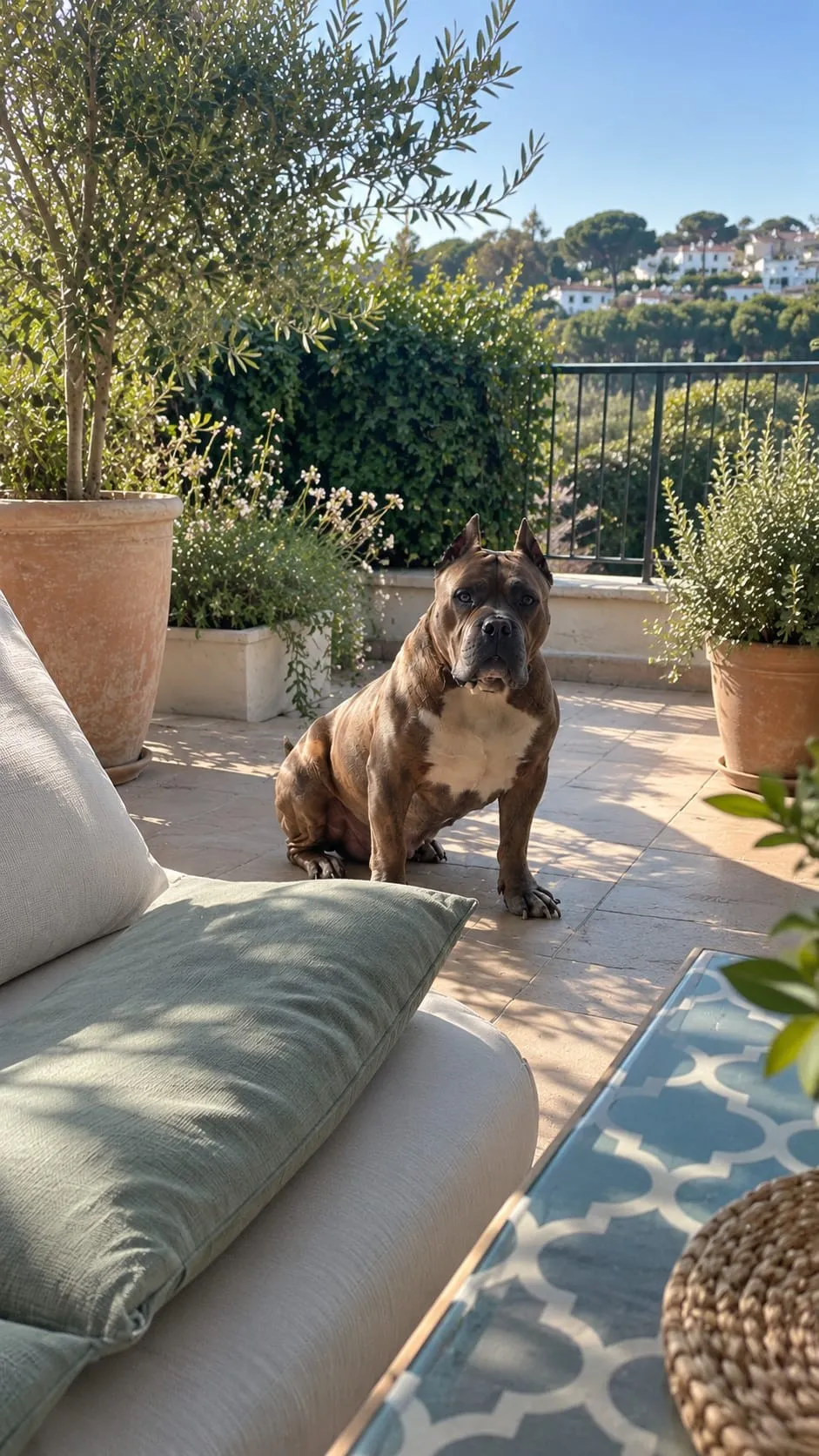
When we adopted Casper, an American bully cross, we had to go through all the paperwork for a potentially dangerous dog (PPP, “perro potencialmente peligroso”). It wasn’t easy: the information is spread across laws, by-laws and town hall websites, and it sometimes contradicts itself. This guide brings together what Andalusian law says, so it’s clearer for you than it was for us. If you’re moving to Spain with one of these breeds, read it before you arrive.
This guide is for orientation only. Each town hall has its own by-laws and may ask for extra requirements or documents: always check with yours before you start.
Which dogs are PPP in Andalusia
Under Andalusia’s Decree 42/2008, the following are considered potentially dangerous:
- Dogs of these breeds and their crosses: pit bull terrier, Staffordshire bull terrier, American Staffordshire terrier, Rottweiler, Dogo Argentino, Fila Brasileiro, Tosa Inu, Akita Inu and Dobermann.
- Dogs with certain physical characteristics (strong muscles, large head, powerful jaw, large size…) set out in the regulations, even if their breed isn’t on the list.
- Dogs the town hall declares dangerous after an attack.
This matters if you adopt a mixed breed: even if you’re unsure of its background, its appearance may make it a PPP. Ask the shelter and your vet before adopting.
Step 1: the licence, before you get the dog
The licence is issued by the town hall where you live, and you need it before you buy or adopt the dog. To get it you need:
- To be over 18.
- A criminal record certificate with no convictions for offences such as homicide, assault or crimes against public health, and no ban on keeping these animals.
- No serious or very serious sanctions in the last three years.
- A physical and psychological aptitude report, done at a medical test centre (like those for driving licences), at your own cost.
- Third-party liability insurance with cover of at least €175,000 per incident.
- A basic training course for PPP dogs, run by an accredited organisation.
The licence lasts five years and can be renewed. If any details change, you have 15 days to tell the town hall.
Step 2: identification and registration
- The dog must be microchipped and registered with the RAIA. See our microchip and RAIA guide.
- It must also be entered in your town hall’s register of potentially dangerous animals.
- Its identification document (DAIRA) carries a red band showing it’s a PPP.
Step 3: the rules in public
- A breed-appropriate muzzle, always in public spaces.
- A non-extendable, strong lead, no longer than one metre.
- One person can only walk one PPP dog at a time, and must be over 18.
- Whoever walks the dog must hold their own licence and carry it along with the DAIRA.
- They can’t enter children’s play areas.
- If the dog is lost or stolen, you have 24 hours to report it to the police.
These rules also apply on dog beaches: muzzle and short lead. More in our dog beaches guide.
Practical tips
- Start at the town hall. Ask for the exact list of documents and the order to get them in: it’ll save you trips.
- Get insurance quotes before adopting. Prices vary a lot between insurers, and some include it in home insurance.
- Allow time. Between the aptitude test, the course, the insurance and the town hall, the licence can take weeks.
- A PPP isn’t a dangerous dog by definition. It’s a legal category based on breed or appearance. With training, socialisation and patience they’re as loving as any other dog, and adopting one gives them a chance they often don’t get.
If you’d like to adopt, there are associations in Málaga dedicated to these dogs, such as AMAR PPP. You’ll find them on our animal shelters page.