
Dog-friendly beaches on the Costa del Sol (2026)
Every dog beach on the Costa del Sol in 2026, town by town, with the rules and tips you need for a safe, happy day by the sea.
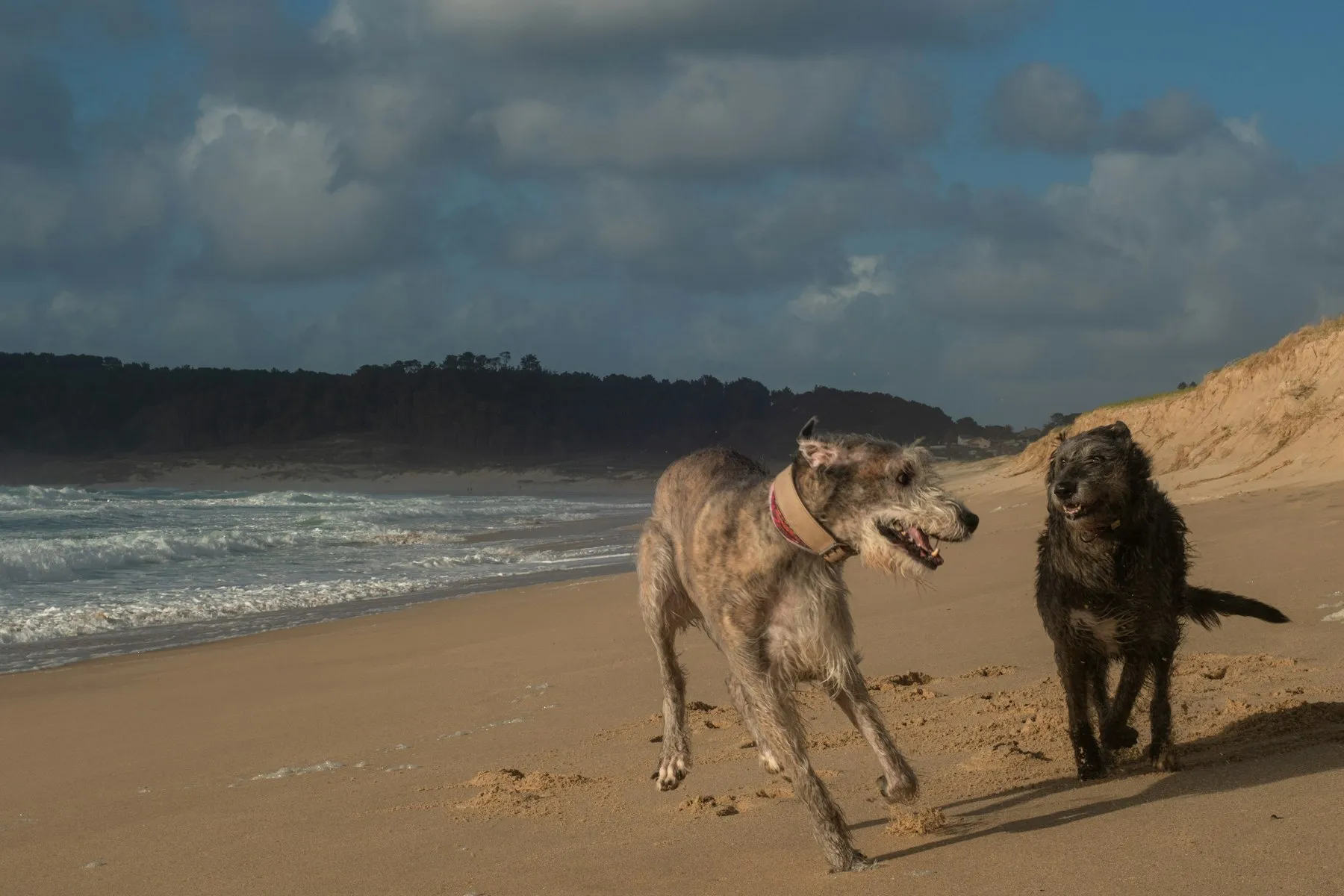
Swimming in the Mediterranean with your dog is one of the joys of living on the Costa del Sol. But not every beach will do: during the bathing season most towns ban animals from the sand, and you can only go to the areas set aside as dog beaches (playas caninas).
This list was checked in September 2026 and we update it every season. Local bylaws change often, so before you go, check the town hall’s website or phone line to confirm the beach is still open and at what times.
Dog beaches, from east to west
| Town | Beach | Good to know |
|---|---|---|
| Torrox | Dog area by the river mouth, near the lighthouse | Small pebble beach. Watch out for rocks. |
| Vélez-Málaga | Torre del Mar dog beach (El Mortero, at the mouth of the río Vélez) | One of the largest, with a play area and a drinking fountain for dogs. |
| Málaga and Rincón de la Victoria | Arroyo Totalán beach (La Cala del Moral) | On the border between the two towns. |
| Fuengirola | Playa del Castillo, next to Sohail Castle | Dark sand. Dogs over 20 kg usually have to stay on the lead. |
| Marbella | El Pinillo | A dog zone within a 1.5 km beach of sand and rock. |
| Marbella | Ventura del Mar | A fenced stretch west of Nueva Andalucía. |
| Casares | Piedra Paloma | Enclosed area with showers. Open since 2016. |
| Manilva | Playa de las Arenas | Signposted area opened in 2025. |
Benalmádena and Mijas have had dog beaches (Arroyo Hondo in Benalmádena opened in 2021), but in 2026 the sources we checked disagree on whether they are still open. If you live there, ask your town hall before you go.
As far as we know, Málaga city, Torremolinos, Estepona and Nerja have no dog beach of their own in 2026. The nearest option is usually in the neighbouring town.
The usual rules
Every town has its own bylaw, but almost all of them ask for the same:
- Microchip and up-to-date vaccinations. Bring the pet passport or vaccination card: you may be asked for it.
- Lead on at the entrances, and on some beaches inside too. Let your dog off only in the marked areas.
- Pick up after your dog straight away. It is the rule most closely enforced, and the reason some dog beaches have closed.
- Breeds classed as potentially dangerous: muzzle and short lead, plus the licence and insurance required by law.
- Opening hours: some beaches limit access to early morning and evening in summer.
Tips for a good beach day
- Avoid the middle of the day. The sand burns and heatstroke comes on faster than you think. Read our guide to heatstroke in dogs.
- Always bring fresh water. Seawater makes dogs thirsty and, if they drink a lot, can cause vomiting or diarrhoea.
- Bring your own shade. A parasol or a small shelter is essential: dog beaches rarely have much.
- Rinse the coat afterwards. Salt and sand irritate the skin, especially between the toes and in the ears.
- Protect hairless areas. Noses and bellies of white or short-coated dogs can burn too.
- Dry the ears after swimming. Moisture encourages ear infections.
If your dog can’t swim well or is getting older, a dog life jacket is a good investment. And don’t force them into the water: some dogs simply don’t enjoy it.
Outside the season
In many towns the ban applies only during the bathing season, usually June to September. In winter some beaches allow dog walks, but not all of them: check the local bylaw before assuming you can go on the sand.